
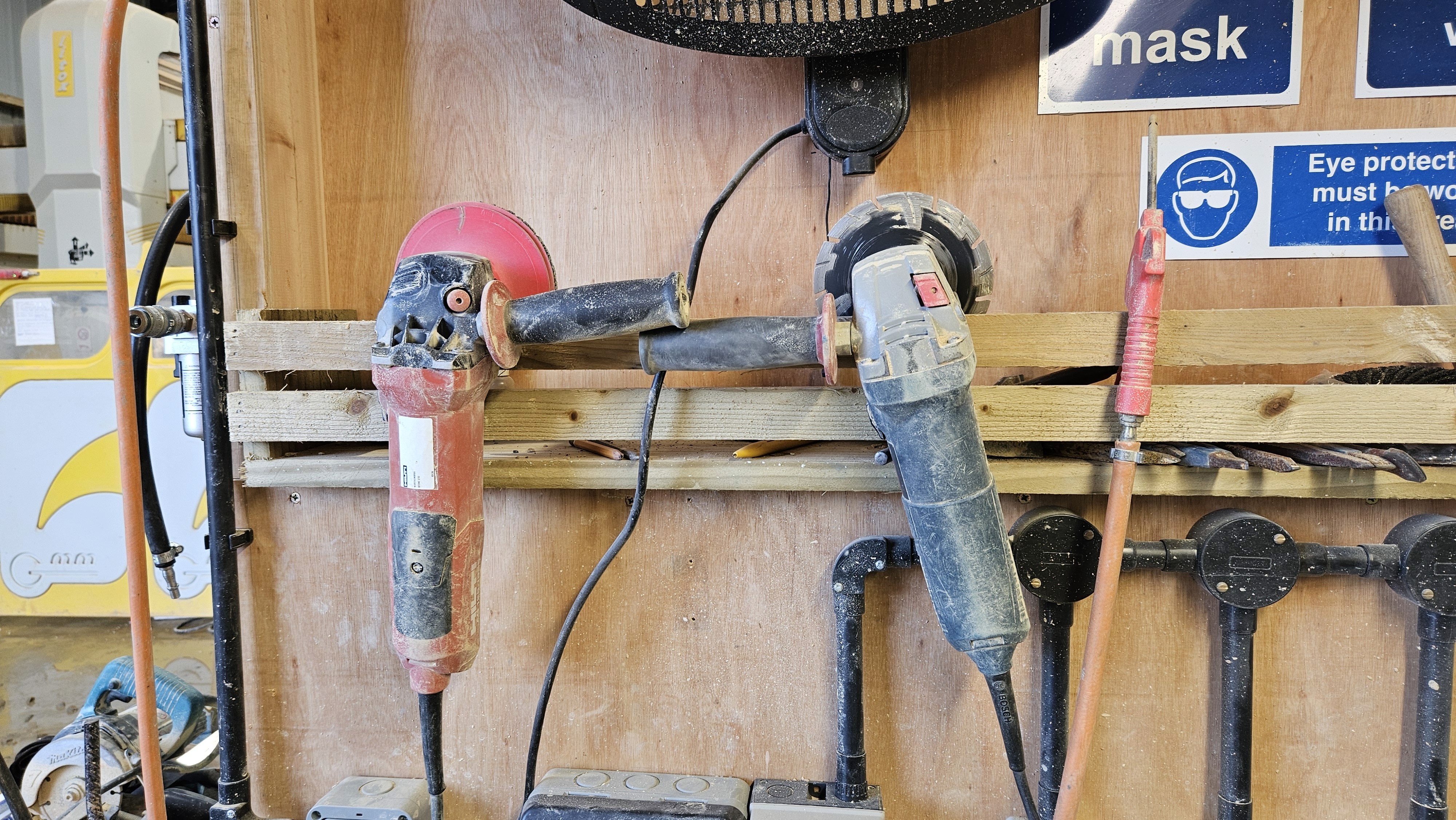
Hand Arm Vibration (HAV) Assessment: When Monitoring Is Required
A deeper look into when a Hand-Arm Vibration (HAV) assessment is required, how exposure is evaluated, and how monitoring supports compliance with the Control of Vibration at Work Regulations.
By James Hall BEng MSc CertOH LFOH
Hand Arm Vibration
Regulatory Guidance
Hand Arm Vibration (HAV) Assessment: When Monitoring Is Required and What the Results Mean
Hand–arm vibration (HAV) is a well-recognised occupational health risk in industries where powered hand tools and machinery are used. While vibration data is often readily available for tools, understanding actual worker exposure, and the associated health risk, requires more than tool specifications alone.
HAV assessment under the Control of Vibration at Work Regulations is concerned with whether exposure is adequately controlled in practice, not simply whether vibration values exist on paper. This article explains when HAV monitoring is required, how exposure should be assessed, and why professional occupational hygiene input is often essential.
What Is Hand–Arm Vibration (HAV)?
Hand–arm vibration refers to mechanical vibration transmitted from tools or workpieces into the hands and arms. Prolonged or repeated exposure can lead to conditions such as Hand–Arm Vibration Syndrome (HAVS), including vascular, neurological, and musculoskeletal effects. HAV is regulated because:
Effects can be irreversible
Symptoms often develop gradually
Early exposure may not be obvious without assessment
Under UK regulations, employers must assess vibration exposure and take action where exposure action or limit values may be exceeded.
What a HAV Assessment Is Designed to Do
HAV assessment are intended to determine:
Whether workers are exposed to vibration
The magnitude and duration of that exposure
Whether exposure action values (EAVs) or exposure limit values (ELVs) may be exceeded
The environment in which a tool's use is undertaken
Whether existing controls are adequate
In simple situations, exposure may be estimated using tool vibration data and usage assumptions. However, this approach has limitations.
Why Tool Data Alone Is Often Not Enough
Manufacturer vibration values are typically measured under controlled conditions and may not reflect real-world use. In practice, exposure is influenced by:
Actual trigger time
Work technique and posture
Tool condition and maintenance
Materials worked on
Variability between operators
As a result, reliance on assumed data alone can lead to:
Underestimation of exposure
Over-conservative conclusions
Poorly targeted control measures
HAV monitoring is often required where there is uncertainty, variability, or enforcement scrutiny.
When Is HAV Monitoring Required?
HAV monitoring may be appropriate where:
Multiple tools are used during a shift
Tool usage varies between workers or tasks
Manufacturer data is inconsistent or unreliable
Exposure is close to action or limit values
Work patterns have changed
Regulatory feedback requests evidence rather than estimates
Monitoring provides objective data that reflects actual working conditions, supporting defensible decision-making.
Interpreting HAV Results Properly
HAV results are not pass/fail indicators. Professional interpretation is required to understand:
How exposure relates to daily and long-term risk
Whether results represent typical or worst-case scenarios
How exposure can be reduced proportionately
Whether health surveillance is indicated
A single result above an action value does not automatically imply failure, nor do low results automatically remove the need for review.
The Role of Occupational Hygiene Expertise
HAV assessment sits firmly within occupational hygiene. Qualified occupational hygienists, typically holding licentiate or higher qualifications awarded by the British Occupational Hygiene Society (BOHS), are trained to:
Design proportionate assessment strategies
Select appropriate monitoring methods
Interpret exposure data against health-based criteria
Advise on practical, effective controls
Support longer-term exposure management
This broader competence ensures that HAV assessment contributes meaningfully to health risk control, rather than existing as a standalone calculation.
HAV and Regulatory Expectations
Under the Control of Vibration at Work regulations, employers must be able to demonstrate that exposure to vibration is adequately controlled. Inspectors from the Health and Safety Executive (HSE) may expect evidence that exposure has been properly evaluated, particularly where:
Powered hand tools are heavily relied upon
Symptoms have been reported
Previous assessments relied on assumptions alone
HAV monitoring and professional assessment provide robust evidence to support compliance.
A Proportionate Approach to HAV Management
Not all situations require detailed monitoring. In some cases, conservative estimates and good control practices may be sufficient. In others, targeted monitoring is essential to clarify risk and guide control. The most effective HAV management strategies match assessment effort to risk and integrate HAV into wider occupational hygiene.
Where hand–arm vibration exposure has been identified or there is uncertainty around risk, early discussion can help ensure assessment and monitoring are proportionate and meaningful. NOHH Ltd provides HAV assessments delivered by BOHS-qualified occupational hygienists across the UK, supporting effective control and long-term worker health protection. Contact us for a free consultation from a qualified hygienist.
CONTACT US