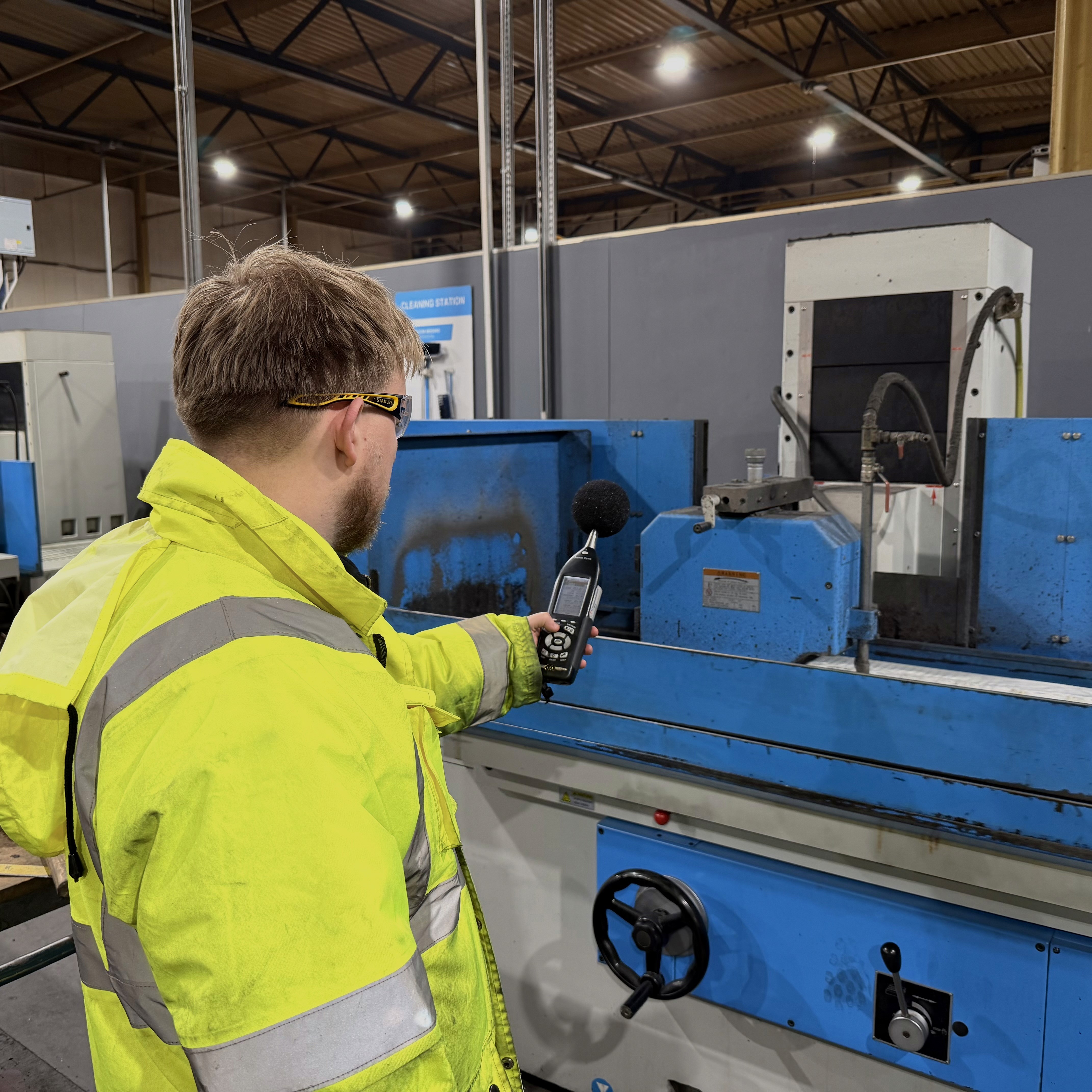

Workplace Noise
Full workplace noise assessments using state of the art noise measuring equipment.
NOHH Ltd delivers statutory workplace noise assessments to support compliance with the Control of Noise at Work Regulations 2005. With decades of experience, our qualified occupational hygienists provide a meticulous service with actionable and defensible control recommendations.
Why Assess Workplace Noise?
Excessive workplace noise is a major cause of noise-induced hearing loss (NIHL), which is permanent and irreversible. Even short-term overexposure can result in temporary hearing loss (threshold shift) and increase the risk of accidents due to reduced communication and awareness.
To protect employees, the Control of Noise at Work Regulations 2005 require employers to assess and manage noise risks in the workplace.
Our Workplace Noise Coverage
We provide full workplace noise assessments across North East England, Teesside, Leeds and West Yorkshire, Hull and the Humber region, Cumbria, and the Scottish Borders. Each area is supported directly, with work arranged to suit site location and operational requirements.
Exposure Action and Limit Values
The Regulations set three key daily/weekly exposure values:
Lower Exposure Action Value (LEAV): 80 dB(A) daily or weekly average; peak 135 dB(C)
Upper Exposure Action Value (UEAV): 85 dB(A) daily or weekly average; peak 137 dB(C)
Exposure Limit Value (ELV): 87 dB(A) daily or weekly average; peak 140 dB(C)
When exposures exceed these levels, employers must take appropriate control measures, provide hearing protection, and implement health surveillance where necessary.
Employer Responsibilities
Every employer should be able to answer:
Are my employees exposed to harmful noise levels?
Have I properly assessed their exposure using personal noise exposures (LEP,d)?
Have I taken all reasonably practicable steps to reduce exposure at source?
If the answer to any of these is unclear, a full workplace noise survey and assessment is required.
Our Workplace Noise Services
NOHH Ltd provides comprehensive noise surveys and assessments in line with the Regulations, including:
Full site surveys using state-of-the-art monitoring equipment
Personal noise exposure assessments (LEP,d) rather than just area readings
Clear reporting of noise levels and comparison with legal limits
Recommendations for noise control measures and remedial actions
Ensuring appropriate hearing protection is selected
Assessment of the adequacy of any hearing protection provided
Guidance on health surveillance, including audiometry where required
Protecting Your Workforce
Our professional reports safeguard your employees’ long-term hearing and wellbeing and ensure compliance with the Control of Noise at Work Regulations. If you have a noise assessment due or would like advice on your current noise controls, feel free to get in touch.