How to Choose the Right Occupational Hygienist to Mitigate Workplace Health Risk
A practical guide on how to choose the right occupational hygienist, what qualifications and competence matter, and how to match assessment to risk.
By James Hall BEng MSc CertOH LFOH
Occupational Hygiene
Regulatory Guidance
How to Choose the Right Occupational Hygienist to Mitigate Workplace Health Risk
Occupational hygiene plays a critical role in protecting worker health and supporting regulatory compliance. However, the term “occupational hygiene” is often used to describe a wide range of activities, from single-issue testing through to comprehensive exposure assessment and long-term risk management.
As a result, organisations are not always clear on what level of occupational hygiene support they actually need, or how to distinguish between providers offering very different scopes of work.
This article outlines what to look for when choosing an occupational hygienist, why professional competence matters, and how to ensure the support you engage is appropriate, proportionate, and defensible.
What Does an Occupational Hygienist Do?
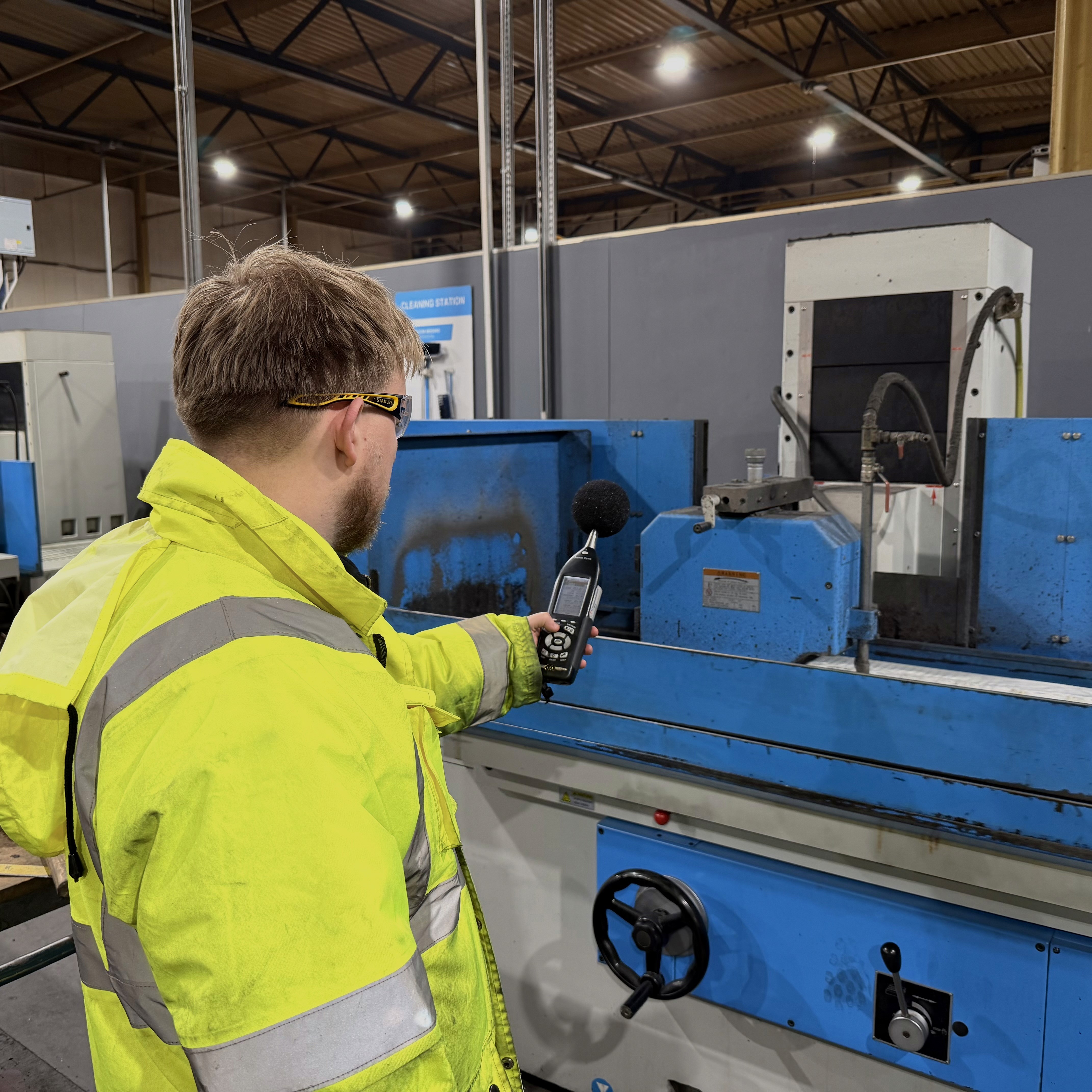
Occupational hygiene is concerned with the anticipation, recognition, evaluation, and control of workplace health risks. This includes exposure to airborne contaminants, noise, vibration, and other agents that may cause adverse health effects over time.
In the UK, occupational hygienists typically demonstrate competence through professional qualifications awarded by the British Occupational Hygiene Society (BOHS). These qualifications reflect formal training, assessment, and ongoing professional development.
Importantly, occupational hygiene is not limited to measurement. It involves understanding how exposure and risk occurs in practice, interpreting results in context, and advising on proportionate and effective control strategies aligned with statutory expectations, including those of the Health and Safety Executive (HSE).
Not All Occupational Hygiene Services Are the Same
Some services described as “occupational hygiene” focus on single-issue testing, such as LEV testing. These activities can be entirely appropriate for specific purposes and are often a legal requirement. However, they do not always address:
How exposure occurs across different tasks
Variability between workers or shifts
Multiple routes of exposure (e.g. inhalation, skin, eyes)
Whether controls are adequate in practice over time
Choosing the right occupational hygienist means understanding whether you require isolated testing, or a broader assessment of exposure and health risk.
Key Factors to Consider When Choosing an Occupational Hygienist
1. Professional Qualification and Competence
Look for hygienists who hold recognised professional qualifications, such as BOHS licentiate or higher awards. This demonstrates training not just in measurement techniques, but in exposure assessment, toxicology, and health-based interpretation.
Qualification matters because H&S compliance is about health risk, not just equipment performance or test results.
2. Breadth of Occupational Hygiene Expertise
A competent occupational hygienist will be able to assess exposure across multiple physical and chemical hazards, including:
This breadth allows assessments to consider how different hazards interact and how controls operate together, rather than in isolation.
3. Ability to Assess Exposure Beyond Equipment
LEV testing and similar activities assess system performance, not worker exposure. A key role of occupational hygiene is to determine whether exposure is adequately controlled in reality, taking into account:
How work is carried out
Duration and frequency of tasks
Human behaviour and variability
Non-inhalation exposure routes
Relative toxicity of the hazard
Providers should be able to explain when further assessment, such as exposure monitoring, is necessary — and when it is not.
4. Quality and Usefulness of Reporting
Occupational hygiene reports should support:
Decision-making by duty holders
Engagement with regulators or advisers
Long-term exposure management strategies
Look for reports that provide clear interpretation and proportionate, fully bespoke recommendations, rather than raw data, pass/fail conclusions or templates.
5. Proportionate, Evidence-Based Approach
The right occupational hygienist will not recommend monitoring or testing by default. Instead, they should be able to justify:
Why assessment is required
What question it is intended to answer
How results will be used
This aligns with statutory expectations and helps avoid unnecessary work while ensuring risks are properly managed.
Matching the Level of Support to the Risk
Not every workplace requires the same level of occupational hygiene input. In some cases, routine testing may be sufficient. In others, a more comprehensive assessment is needed to demonstrate that exposure is adequately controlled.
A key part of occupational hygiene competence is helping organisations match the level of assessment to the level of risk, rather than applying a one-size-fits-all approach.
Long-Term Benefits of Occupational Hygiene Support
Occupational hygiene is rarely a one-off requirement. Over time, organisations may introduce new substances, modify processes, or change how work is carried out. Working with a qualified occupational hygienist who understands your operations over time supports:
Consistent decision-making
Proportionate control strategies
Clear regulatory engagement
Long-term protection of worker health
Staff morale, engagement and productivity
Reduced risk of financial penalties
This continuity is often where the greatest value lies.
A Proportionate, Professional Perspective
Choosing the right occupational hygienist is about ensuring that workplace health risks are understood, assessed, and controlled in a way that is proportionate, defensible, and aligned with regulatory expectations. Understanding what to look for helps organisations avoid both inadequate assessment and unnecessary work, while ensuring that health risks are managed effectively.
NOHH Ltd provides occupational hygiene services delivered by BOHS-qualified hygienists across the UK, supporting proportionate assessment, clear reporting, and long-term exposure management. Contact us below for a free consultation from a qualified hygienist.
CONTACT US