What LEV Testing Does and When Further Assessment May Be Needed
A practical explanation of why LEV testing is legally required, what LEV testing confirms, and when further occupational hygiene assessment may be needed.
By James Hall BEng MSc CertOH LFOH
LEV Testing
Local Exhaust Ventilation
What LEV Testing Does and When Further Assessment May Be Needed
Local exhaust ventilation (LEV) plays a critical role in controlling airborne contaminants in many workplaces. As a result, LEV testing is a common legal and practical requirement under COSHH and is frequently referenced following inspections or professional reviews.
LEV testing is an important part of exposure control, and in many cases, it is essential. However, while LEV testing confirms that a control system is functioning as intended, it does not, on its own, demonstrate whether worker exposure is adequately controlled.
This article explains what LEV testing is designed to do, why it is legally required, where its limitations lie, and how it fits most effectively within broader occupational hygiene work.
What Is LEV Testing and Why Is It Required?
LEV testing is carried out to assess whether a local exhaust ventilation system is operating as designed and continues to provide effective control of airborne contaminants in the workplace. The process involves evaluating the mechanical condition and performance of the system against its original design or commissioning criteria.
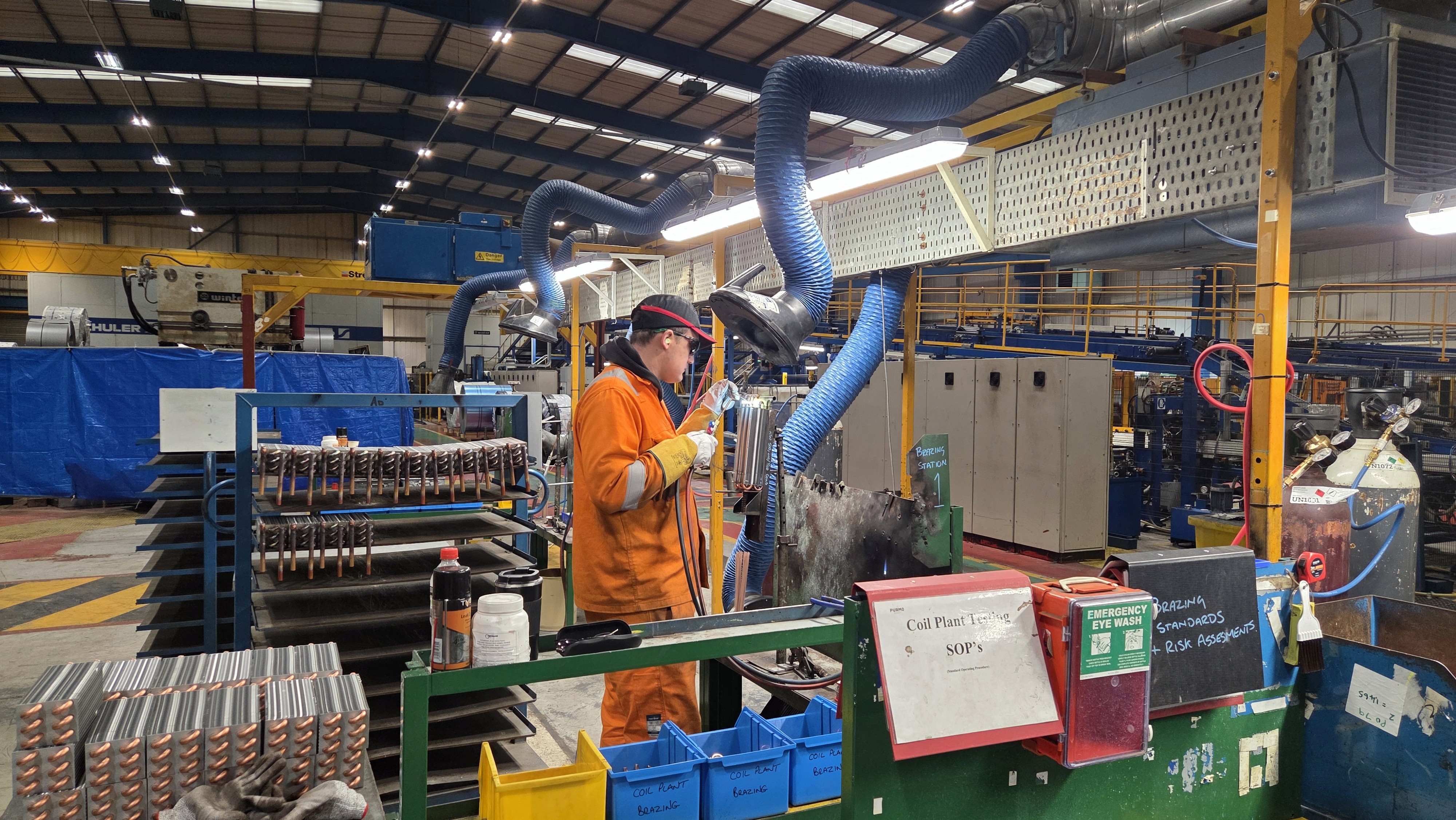
A typical thorough examination and test may include measurements of airflow, capture velocities and static pressure, alongside inspection of system components such as ducting, hoods, filters and fans. These checks help confirm that the system continues to capture, transport and remove hazardous substances effectively.
LEV testing forms an important part of maintaining compliance with COSHH and ensuring that engineering control measures remain effective over time.
How Often Should LEV Systems Be Tested in the UK?
Under UK health and safety law, Local Exhaust Ventilation (LEV) systems must undergo a thorough examination and test at least once every 14 months, as outlined in HSE guidance HSG258: Controlling Airborne Contaminants at Work. This process helps demonstrate that the ventilation system remains mechanically sound, that air is being effectively moved and captured, and that the system continues to meet basic performance criteria.
LEV testing is a legal requirement and forms an important part of maintaining effective exposure control. It is a core service provided by occupational hygiene consultancies such as NOHH Ltd, and plays a key role in ensuring workplace control measures remain effective.
What LEV Testing Does Not Assess
LEV testing does not directly measure worker exposure. Specifically, it does not:
Measure airborne contaminant concentrations in the breathing zone
Account for how tasks are actually carried out day to day
Capture variability in work practices or behaviour
Confirm whether exposure is being adequately controlled in practice
For this reason, LEV testing alone may not always be sufficient to demonstrate that exposure is adequately controlled, particularly where occupational exposure limits apply, work patterns vary, or processes have changed. This does not represent a failure of LEV testing itself, but a limitation of what it is designed to show.
Why This Distinction Matters
LEV systems are often one element of a wider control strategy. Their effectiveness depends on:
How they are used in practice
Whether work methods align with design assumptions
The nature of the substances being controlled
Duration and frequency of exposure
LEV testing confirms system performance, whereas occupational hygiene work considers whether that performance is sufficient to control exposure. This distinction is particularly important during statutory engagement, including discussions with the HSE, where evidence of exposure control (not just system condition) may be expected.
How Occupational Hygiene Complements LEV Testing
Within occupational hygiene work, LEV testing is often used as one input among several. A qualified occupational hygienist may:
Review LEV test results alongside exposure data
Assess whether the system remains appropriate for the task
Consider task variability and user behaviour
Identify situations where actual exposure potential falls outside the scope of the LEV provided
In some cases, this may include targeted exposure monitoring to confirm whether LEV performance is delivering adequate control in practice. In this way, LEV testing supports interpretation and decision-making, rather than acting as a standalone conclusion.
Choosing the Right Level of Support
Not every situation requires the same level of input. In some cases, single-issue testing may be entirely appropriate. In others, a broader occupational hygiene approach is necessary. The key is ensuring that the scope of work matches:
The complexity of exposure
The potential health risk
The need for defensible evidence
Long-term operational objectives
Understanding the difference between occupational hygiene work and single-issue testing helps organisations choose support that is proportionate, effective and sustainable. Additional occupational hygiene input may be appropriate where:
Processes, materials, or work practices have changed
Exposure has not previously been assessed
There is uncertainty around actual exposure levels
Statutory feedback requests evidence beyond system condition
Here, LEV testing remains essential, but it is most effective when integrated into a broader occupational hygiene assessment strategy.
Taking a Proportionate Approach
Where LEV testing has been recommended or is due as part of statutory requirements, discussing scope and context early can help ensure results are interpreted appropriately and, where necessary, supported by wider occupational hygiene assessment.
NOHH Ltd provides statutory LEV testing alongside broader occupational hygiene services delivered by BOHS-qualified hygienists across the UK, supporting proportionate compliance and long-term exposure management. Contact us for a free consultation from a qualified hygienist.
CONTACT US