LEV Testing Under COSHH: A Practical Guide to TExT Requirements
Understand LEV testing requirements under COSHH, including TExT intervals, HSG258 guidance, Regulation 6–9 duties and context behind effective control..
By Nick Hall BSc Trainee Occupational Hygienist
LEV Testing
COSHH
LEV Testing Under COSHH: A Practical Guide to TExT Requirements
Local exhaust ventilation (LEV) systems are widely used across industrial and manufacturing environments to control airborne contaminants such as welding fume, dust, mist, vapours and process-generated particulate.
Under COSHH Regulation 9, employers have a legal duty to ensure LEV systems are maintained in an efficient working order, good repair and clean condition. This includes undertaking a LEV Thorough Examination and Test (TExT) of the system at suitable intervals.
For most LEV systems, examination is required at least every 14 months. However, depending on the process, contaminant or exposure risk involved, more frequent examination may sometimes be appropriate.
How COSHH Regulations 6–9 Fit Together
LEV testing should not be viewed in isolation. Under COSHH, Regulation 6 requires suitable assessment of the risk created by hazardous substances, Regulation 7 requires prevention or adequate control of exposure, Regulation 8 requires control measures to be properly used, and Regulation 9 requires those control measures to be maintained, examined and tested.
In practice, this means an LEV TExT is only one part of a wider exposure-control system. A system may have airflow, but still fail to control exposure effectively if:
Hood design is poor
Contaminant release is turbulent
Operator positioning changes
Extraction is too distant from the source
Maintenance standards deteriorate over time
This is where HSG258 and wider industrial ventilation guidance such as ACGIH principles become particularly important, as both focus heavily on practical system performance and real-world contaminant control effectiveness.
What Is A Thorough Examination & Test (TExT)?
A Thorough Examination and Test is a detailed assessment of both the physical condition and operational performance of the LEV system. The purpose of examination is not simply to confirm airflow exists within the system, but to determine whether airborne contaminants continue to be adequately controlled during normal workplace activities.
A typical LEV TExT assessment may include:
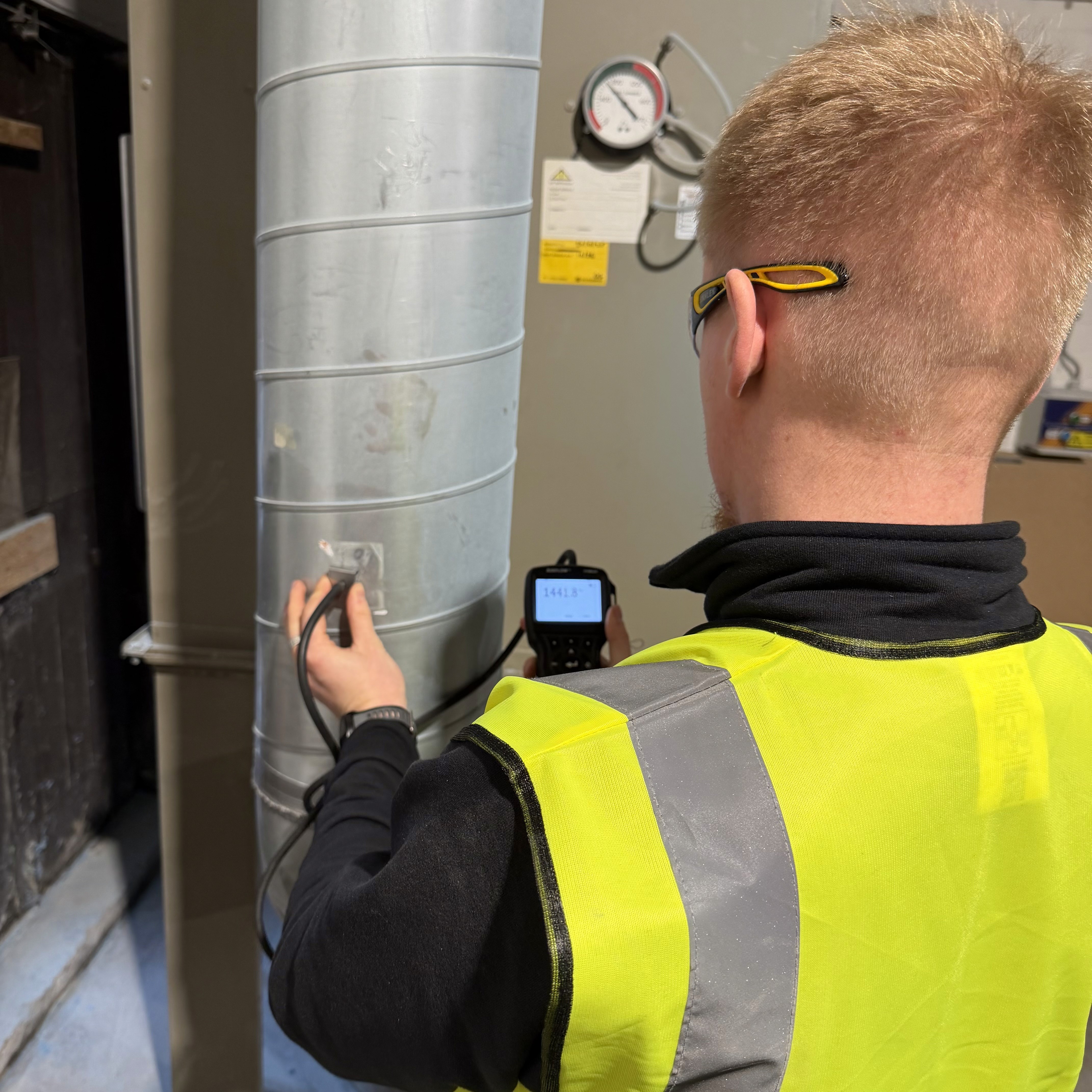
Airflow and pressure measurements
Hood and enclosure assessment
Smoke visualisation testing
Ductwork inspection
Fan performance assessment
Filter condition assessment
Review of system defects or deterioration
The examination should be undertaken under representative operating conditions to accurately assess system performance during normal use. In some circumstances, however, direct LEV measurements may be difficult or impracticable to obtain. This may occur where:
Systems are fully interlocked
Hoods are inaccessible during operation
Ductwork lacks suitable test points
Extraction arrangement prevents representative measurement from being undertaken safely or accurately
This is particularly important where airborne contaminants are toxic, present significant health risks or where exposure against Workplace Exposure Limits (WELs) remains unknown. In these situations, workplace exposure monitoring and occupational hygiene assessment may become especially important, or statutorily necessary, in determining whether airborne contaminants are actually being controlled within the employee breathing zone during representative operational activities.
Ultimately, the objective of LEV assessment is not simply obtaining numerical measurements, but verifying effective exposure control in practice.
What LEV Systems Require Examination?
LEV examination requirements may apply to a wide range of workplace extraction systems, including:
Pharmaceutical extraction systems
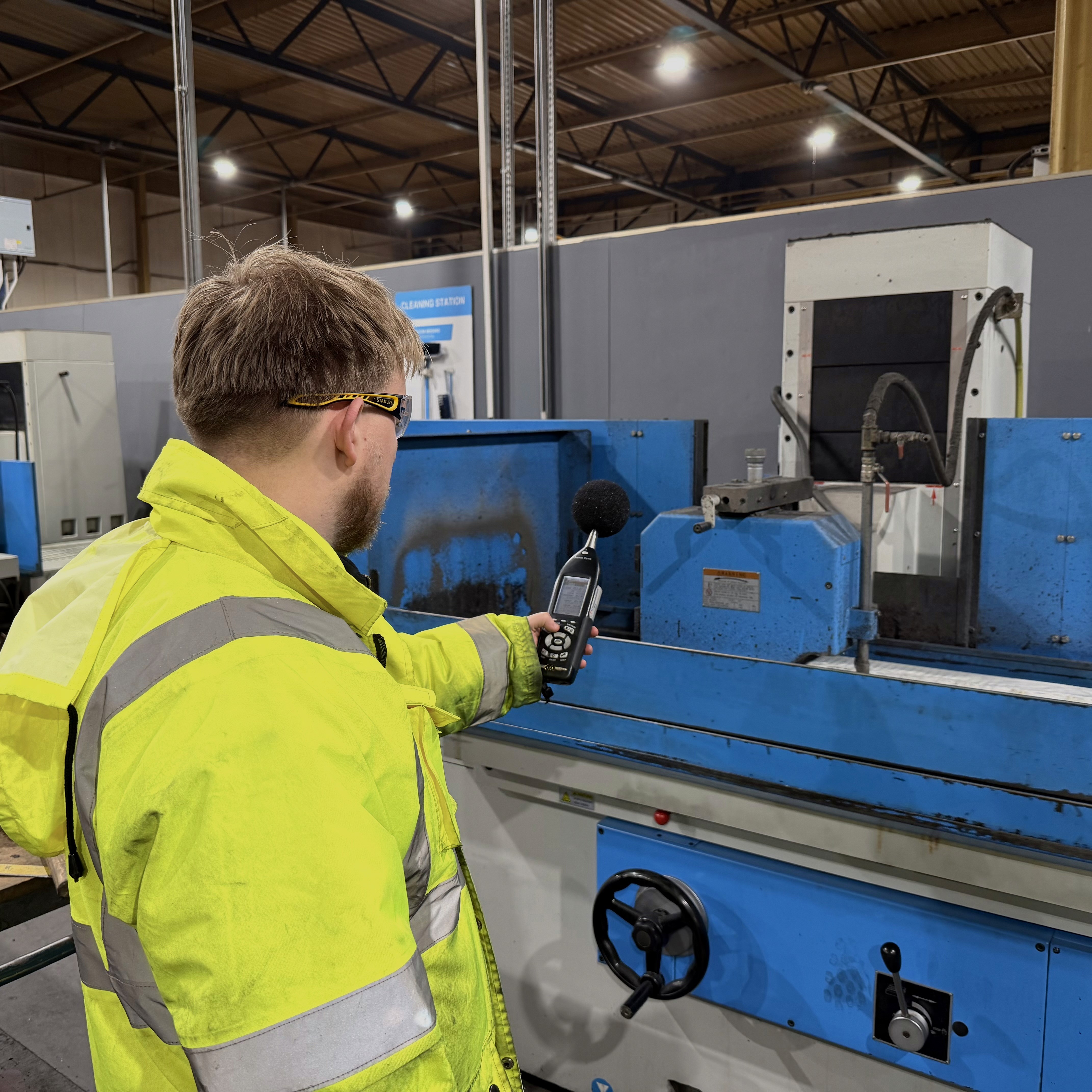
Grinding & abrasive processes
Laboratory extraction systems
Where LEV is used to control exposure to hazardous substances under COSHH, examination and testing will normally be required.
How Often Should LEV Systems Be Tested?
The 14-month interval commonly referenced for LEV testing applies to most systems, but it is not the only interval under COSHH. Certain higher-risk processes listed under COSHH Schedule 4 require more frequent Thorough Examination and Test intervals. HSG258 also reinforces that LEV assessment should consider process risk, contaminant behaviour, system condition and whether the control remains effective in practice.
Process / LEV use | Maximum interval |
|---|---|
Blasting used in or incidental to cleaning metal castings | 1 month |
Jute cloth manufacture | 1 month |
Metal grinding, abrading or polishing using mechanical power, other than wet processes | 6 months |
Processes giving off dust or fume where non-ferrous metal castings are produced | 6 months |
Processes involving electrolytic chromium | 6 months |
Other LEV systems used to control hazardous substances | 14 months |
The 14-month interval should therefore be treated as a statutory maximum for many systems, not automatically as best practice for every environment.
In practice, systems associated with: high-risk contaminants, abrasive dust loading, corrosive process emissions, heavy operational usage, or poor maintenance conditions may require closer inspection and more proactive maintenance arrangements to ensure continued control effectiveness.
LEV Testing Statistics in the UK
Despite LEV systems being one of the primary engineering controls used to reduce airborne exposure within UK workplaces, HSE data presented within industry guidance and training material continues to identify significant shortcomings in real-world LEV management and performance.
Industry observations highlighted by HSE have previously indicated that:
Around 1 million LEV systems may exist within UK workplaces
Approximately 60% are not thoroughly examined and tested correctly
Approximately 60% are not competently tested
Approximately 60% are not adequately maintained or checked between examinations
HSE guidance has also consistently highlighted that employers and employees are often overly optimistic regarding the real-world effectiveness of LEV systems for exposure control. In practice, systems may continue operating while:
Airflow performance deteriorates
Hoods are repositioned
Filters become overloaded
Ductwork becomes damaged
Process changes reduce capture effectiveness
Additionally, proper commissioning and baseline performance verification is frequently overlooked following installation. In many cases, LEV systems are installed without clearly defined benchmark performance specifications, making future Thorough Examination and Test assessment significantly more difficult to assess against its optimal benchmark.
LEV Testing In Practice
Effective LEV assessment involves considerably more than recording airflow readings or completing benchmark measurements in isolation.
Workplace layout, contaminant behaviour, process turbulence, operator positioning and the way employees actually interact with the process can all significantly influence whether airborne contaminants are effectively controlled in practice.
Common issues identified during examination may include:
Poor hood positioning
Unsuitable hood type for the process
Ineffective enclosure
Inadequate capture velocity
Overloaded filters
Cross-draught interference
Damaged ducting
Deteriorating fan performance
Process changes affecting overall system suitability
In practice, many LEV examinations are undertaken as largely mechanical or compliance-based exercises, without sufficient consideration of the actual occupational hygiene objective: effective control of employee exposure.
While benchmark measurements and HSG258 guidance remain extremely important, LEV performance should ultimately be considered in the context of actual airborne exposure risk and contaminant control effectiveness.
For example, systems may occasionally fail certain benchmark performance indicators while still adequately controlling airborne exposure under representative working conditions. Equally, systems achieving acceptable airflow measurements may still fail to effectively control exposure because of poor hood design, operator positioning, process changes or contaminant behaviour.
This is one of the reasons occupational hygiene assessment and workplace exposure monitoring remain so important alongside LEV examination itself. Exposure monitoring represents the definitive assessment of whether airborne contaminants are ultimately being controlled within the breathing zone of employees during real operational activities.
The objective of LEV assessment is therefore not simply achieving numerical benchmark values alone, but ensuring hazardous airborne contaminants are adequately controlled in practice under normal workplace conditions.
Practical LEV Support
At NOHH Ltd, we provide LEV Thorough Examination and Test (TExT) services by BOHS qualified occupational hygienists and P601 qualified LEV engineers. We support organisations across North East England, Teesside, Yorkshire, the Humber, Cumbria, the Scottish Borders and wider UK regions across a wide range of industrial and technical environments.
Whether you require routine statutory LEV examination or more detailed occupational hygiene support around workplace exposure control, we’re happy to discuss your requirements and provide professional technical support.
CONTACT US