On-Torch Extraction for Welding Fume: Is It Effective in Practice?
A practical assessment of on-torch (LVHV) welding extraction systems, including real-world exposure monitoring results and performance considerations.
By James Hall BEng MSc CertOH LFOH
LEV Testing
Exposure Monitoring
On-Torch Extraction for Welding Fume: Is It Effective in Practice?
Welding fume remains a key focus area for occupational health professionals, with clear expectations that exposure is adequately controlled, ideally at source. As a result, there has been a noticeable increase in the use of low volume high velocity (LVHV) extraction systems, particularly on-torch solutions integrated directly into welding equipment.
These systems are often presented as a more practical alternative to traditional local exhaust ventilation (LEV), offering improved usability and consistent capture without reliance on movable extraction arms.
But in practice, how effective are they?
What Are On-Torch (LVHV) Extraction Systems?
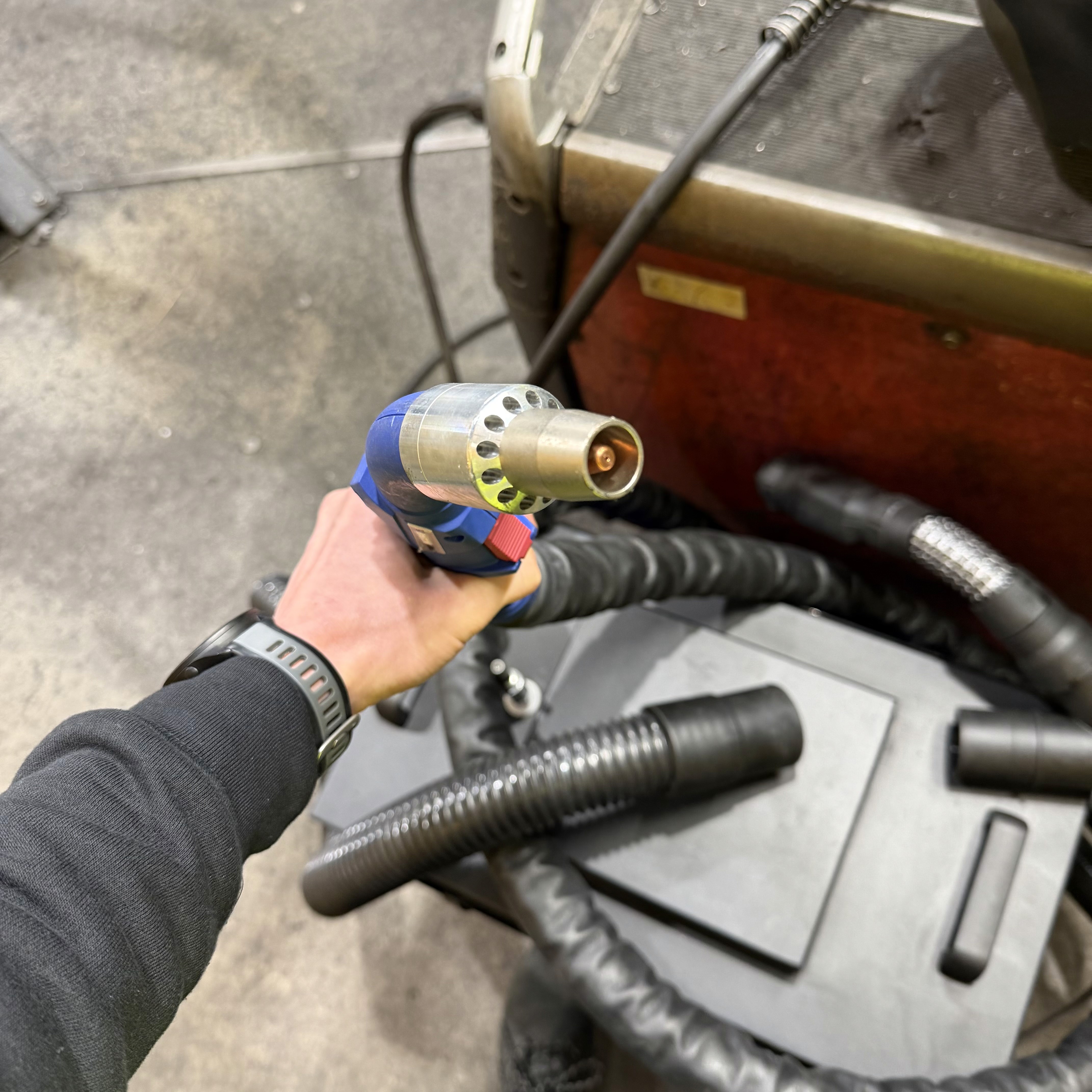
LVHV systems are designed to capture fume at source using high-velocity airflow at relatively low volumes. In welding applications, this typically involves extraction integrated into the torch itself, drawing fume away as it is generated.
This approach aims to reduce reliance on operator positioning of traditional LEV systems and improve consistency of control. Because of this, on-torch systems are increasingly being introduced across fabrication and manufacturing environments due to:
Improved flexibility compared to fixed or arm-based LEV
Reduced dependence on correct positioning
Ease of use in constrained or repetitive tasks
In many cases, they are seen as a way to simplify compliance with current expectations around welding fume control.
Real-World Assessment: Do They Work in Practice?
To assess this, we recently carried out an investigation into the effectiveness of on-torch extraction systems in a real working environment.
The application involved spot MIG welding, with relatively short arc times and intermittent fume generation — a scenario where consistent capture can be more difficult to achieve.
The system used was a commercially available fume extraction unit, incorporating H14 HEPA filtration and a filter health monitoring system.
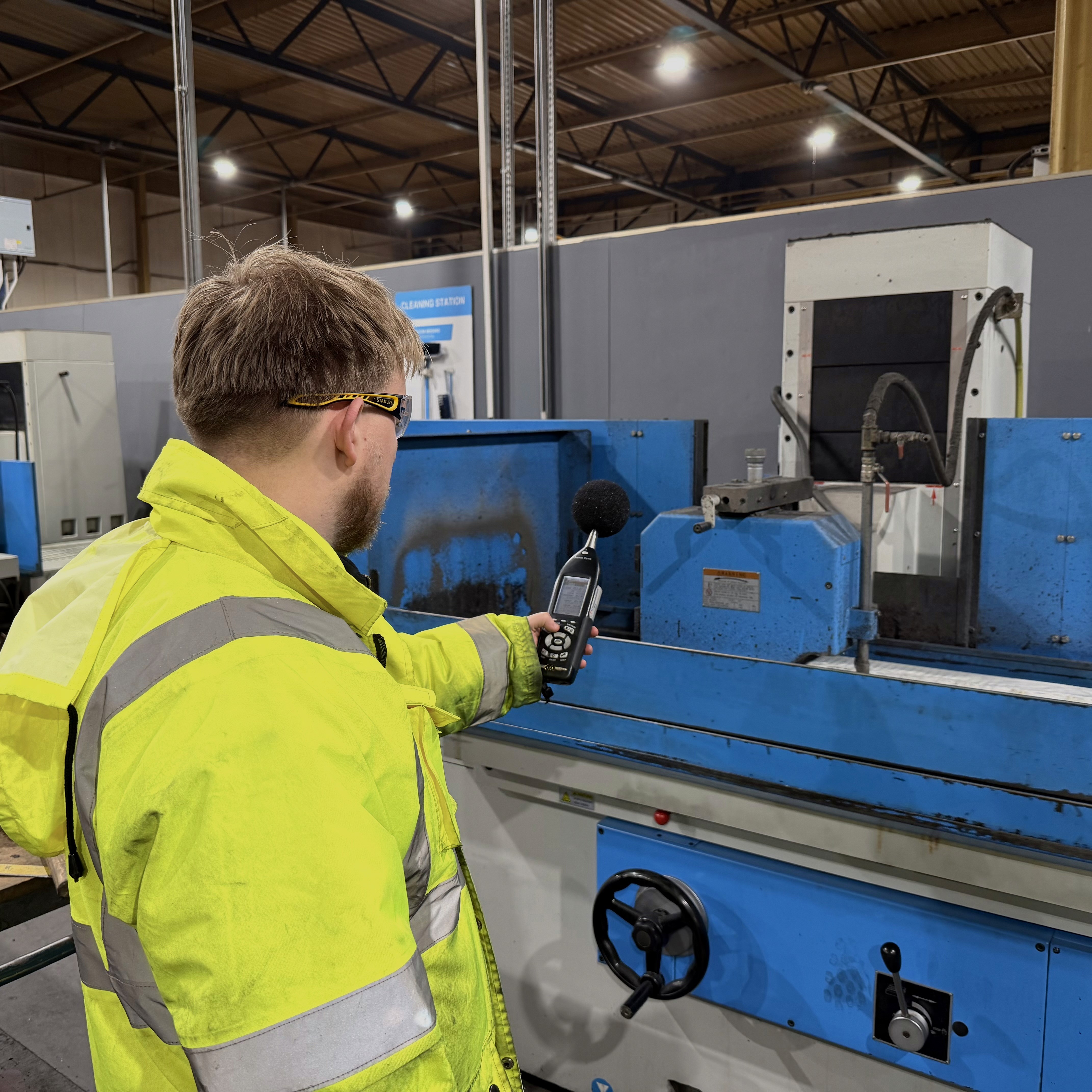
Air monitoring was carried out to assess exposure to metal fume, including manganese, both before and after the introduction of on-torch extraction.
Findings
A reduction in metal fume and manganese exposure of more than 50% across both personal and fixed point samples were observed
Capture was noticeably more consistent at source compared to previous arrangements
Welders reported no noticeable increase in torch weight or reduction in performance
Ease of use was generally well received, with minimal impact on workflow
How do LVHV Systems Weigh Up?
Advantages
Based on this and similar observations, on-torch extraction can be particularly effective where:
Welding tasks are repetitive and controlled
Operator technique is consistent
Access for traditional LEV is limited
Arc times are longer, allowing more sustained capture
In these cases, LVHV systems can provide a reliable method of controlling exposure at source.
Limitations and Considerations
While the results were positive, it’s important to recognise that performance is not uniform across all applications.
Key considerations include:
Short arc or intermittent welding may reduce capture efficiency
Effectiveness is still influenced by operator technique, weld direction and positioning
LVHV systems may not fully replace traditional LEV in all scenarios
Regular maintenance and filter condition are critical to performance
In practice, these systems should not be viewed as a universal solution, but as part of a broader control strategy. Rather than a direct replacement, LVHV systems are often best considered alongside traditional LEV approaches to keep potential exposure as low as reasonably practicable.
Conclusion
On-torch extraction systems can provide a significant improvement in exposure control when applied appropriately. However, performance is highly dependent on how systems are used in practice, not just how they are specified. Assessment under real working conditions remains essential to confirm that exposure is being adequately controlled.
From a compliance perspective, COSHH requires exposure to be reduced as low as reasonably practicable (ALARP), and on-torch extraction may represent a practical means of achieving this, particularly as its use becomes more common across industry.
In summary, LVHV systems represent a useful development in welding fume control, particularly where traditional LEV is less practical or not fully controlling exposure. However, their effectiveness should always be verified through professional assessment, rather than assumed based on specification alone.
Assessment & Advice
At NOHH Ltd, we carry out LEV testing on both traditional systems and on-torch extraction setups, as well as comparative assessments of LEV and LVHV performance through exposure monitoring. If you’d like us to review an existing system or a recent installation, feel free to get in touch.
CONTACT US