CNC Machining: Considerations for LEV, COSHH and Metalworking Fluids
Understanding how machining processes, local exhaust ventilation and metalworking fluid management combine to influence employee exposure during CNC machining operations.
By James Hall BEng MSc CertOH LFOH
LEV Testing
COSHH
CNC Machining: Considerations for LEV, COSHH and Metalworking Fluids
Modern CNC machining has transformed manufacturing, enabling high levels of precision, productivity and automation across a wide range of engineering sectors. Alongside these benefits, however, the use of water-mix metalworking fluids introduces occupational health risks that require careful assessment and control.
Discussions surrounding CNC machining often focus on the performance of Local Exhaust Ventilation (LEV) systems and LEV Thorough Examination and Test (TExT). Whilst these remain essential components of effective exposure control, they represent only part of a much broader occupational hygiene picture. Employee exposure is influenced by the machining process itself, the condition of the metalworking fluid, machine design, operator interaction and the effectiveness of the overall control strategy.
This article explores the occupational hygiene considerations associated with modern CNC machining, drawing upon practical observations made during workplace investigations undertaken by NOHH Ltd.
The Process Determines the Risk
Discussions surrounding CNC machining frequently begin with the Local Exhaust Ventilation (LEV) system. However, our experience undertaking metalworking fluid occupational hygiene investigations across engineering environments has consistently shown that employee exposure is often determined long before airborne contaminants reach the extraction system.
During investigations, it is not unusual to find neighbouring CNC machining centres connected to the same extraction system exhibiting noticeably different levels of visible mist release. Initial assumptions often focus on LEV performance, yet closer examination commonly identifies that the machining process itself has a significant influence on contaminant generation. High-speed milling operations frequently produce greater aerosolisation than slower-speed turning processes, whilst coolant pressure, tool engagement, machining strategy and cycle duration all influence both the quantity of airborne mist generated and the way it behaves within the machine enclosure. Consequently, two machines producing superficially similar components may present markedly different occupational hygiene risks despite appearing almost identical from an engineering perspective.
Perhaps one of the more surprising observations during our investigations is that visible mist release is not always a reliable indicator of risk. Machines exhibiting obvious mist escape may present relatively low respiratory concern where coolant condition is well managed, whilst machines with little visible release may warrant closer investigation because the occupational hygiene risk is determined by the composition of the aerosol, not simply its visibility.
These observations reinforce an important occupational hygiene principle: the effectiveness of any engineering control is ultimately governed by the process it is intended to control. Before considering airflow measurements or statutory LEV examination results, it is essential to understand how airborne contaminants are generated, how they behave within the machine and the circumstances under which they enter the operator's breathing zone.
In our experience, understanding how contaminants are generated is almost always more valuable than beginning with how they are extracted. The machining process, not the LEV system, forms the starting point of every meaningful occupational hygiene assessment.
Modern LEV Systems
Local exhaust ventilation remains one of the most effective engineering controls available for reducing exposure to airborne contaminants generated during CNC machining. Thorough Examination and Test (TExT) is an essential statutory requirement, confirming that the system continues to perform as originally intended and identifying defects which may affect its performance.
During LEV examinations undertaken by NOHH, we’ve found that CNC machines are increasingly fitted with proprietary oil mist collectors from manufacturers such as Filtermist, Absolent, Donaldson and AirBench. Unlike conventional capture hoods, these systems often provide limited opportunity for meaningful face velocity measurements because contaminant generation occurs almost entirely within the machine enclosure rather than at an open capture point. In addition, duct velocity or static pressure readings may be inaccessible without dismantling the installation. Consequently, assessment frequently relies upon system performance, fitted airflow indicators, clearance behaviour and practical observation.
As such, a satisfactory TExT should be viewed for what it is: a performance review of the engineering control. It confirms whether the LEV system is functioning effectively, but it does not, in isolation, determine whether employee exposure has been adequately controlled.
Across numerous workplace investigations, NOHH has examined CNC machining centres where LEV systems have met their expected performance criteria, yet visible mist release was still observed during machine access or following the use of compressed air. Equally, we've encountered systems operating outside their original commissioning parameters that continued to provide effective practical control because the machining process itself generated very little airborne contaminant.
These observations reinforce an important distinction. An LEV examiner asks one question, "Is the LEV system performing as intended?" An occupational hygienist reviewing the system asks an additional question: "Is the employee's exposure being adequately controlled?"
Metalworking Fluids
When discussing CNC machining, the respiratory hazard is often described simply as 'oil mist' or ‘metalworking fluid mist’. Whilst this terminology is widely used, it can oversimplify the occupational hygiene challenge.
As metalworking fluids circulate through machine sumps they become contaminated with tramp oil, fines and process debris, creating conditions that may support microbial growth if fluid management deteriorates. Biofilms can develop within coolant systems, allowing bacteria, including Gram-negative bacteria that are commonly encountered in poorly managed water-mix metalworking fluid systems, to proliferate. As these microorganisms break down and release cellular material, the composition of the airborne aerosol changes, potentially introducing biologically active contaminants such as endotoxins alongside the mist itself. As such, the focus is not the amount of mist present, but what the mist could potentially contain.
One of the more important observations made we've made is, unlike many workplace contaminants, the respiratory hazard associated with water-mix metalworking fluids is dynamic rather than static. A machining centre that presented little respiratory concern following commissioning may present a significantly different exposure profile months later if coolant management deteriorates, despite no change to the machining process or LEV system. During workplace investigations, we've encountered machining centres where LEV systems were operating as intended, yet deteriorated coolant conditions represented the more significant occupational hygiene concern. In these situations, improving coolant management has often provided a greater reduction in respiratory risk than modifications to the extraction system itself.
This distinction is reflected within HSE guidance, which places considerable emphasis on the effective management of water-mix metalworking fluids to reduce the risk of occupational asthma, hypersensitivity pneumonitis and other respiratory disease. Effective exposure control therefore begins long before contaminants reach the LEV system.
COSHH Assessment
Whilst LEV plays an important role in controlling airborne contaminants generated during CNC machining, it represents only one element of a suitable and sufficient COSHH assessment. Effective exposure control requires consideration of the complete exposure scenario, including the machining process, the condition of the metalworking fluid, operator interaction, maintenance arrangements, cleaning activities and the effectiveness of existing engineering controls.
For this reason, occupational hygiene assessments extend beyond measuring extraction performance alone. Understanding how employees interact with machinery throughout a working shift is often equally important. Routine activities such as opening machine enclosures, changing tooling, removing swarf, topping up coolant, cleaning machines and undertaking maintenance may all present exposure scenarios that differ significantly from normal production. Particular attention should also be given to the use of compressed air, which can rapidly aerosolise residual metalworking fluid and bypass otherwise effective engineering controls, creating unnecessary exposure within the operator's breathing zone.
Similarly, the effectiveness of LEV cannot be considered in isolation. A well-designed extraction system may provide excellent control during machining, yet exposures may still occur if enclosures remain open unnecessarily, coolant systems are poorly maintained or work practices bypass the intended engineering controls.
The COSHH hierarchy of control reflects this broader approach by placing elimination, substitution and engineering controls ahead of reliance upon administrative controls or personal protective equipment. For CNC machining, effective risk management is therefore achieved through the combined application of process design, coolant management, engineering controls, planned maintenance and suitable working practices, rather than any single control measure in isolation.
Clearance Times
Modern CNC machining centres often rely upon enclosed machining and local exhaust ventilation (LEV) to control the release of airborne metalworking fluid mist. However, even where extraction systems are operating effectively, airborne contaminants remain within the enclosure immediately after machining has ceased. Opening the machine too soon can therefore expose operators to contaminants before sufficient clearance has occurred.
Clearance time is the period required for airborne contaminants generated during machining to be removed from the machine enclosure following completion of the machining cycle. Whilst many LEV systems incorporate timed door interlocks or programmed delays, these settings should not be assumed to provide adequate clearance without verification. Clearance times vary considerably between machines and are influenced by a combination of factors, including enclosure volume, extraction airflow, machine design, the characteristics of the machining process and the location of extract points. Consequently, two apparently identical machining centres may require significantly different clearance periods despite operating similar LEV systems.
Clearance behaviour should also be considered in the context of machine design. Whilst enclosed machining centres allow contaminants to be retained until adequate clearance has occurred, larger machining centres used to manufacture oversized components may not permit full enclosure. In these situations, alternative engineering controls and operator positioning become increasingly important in reducing exposure.
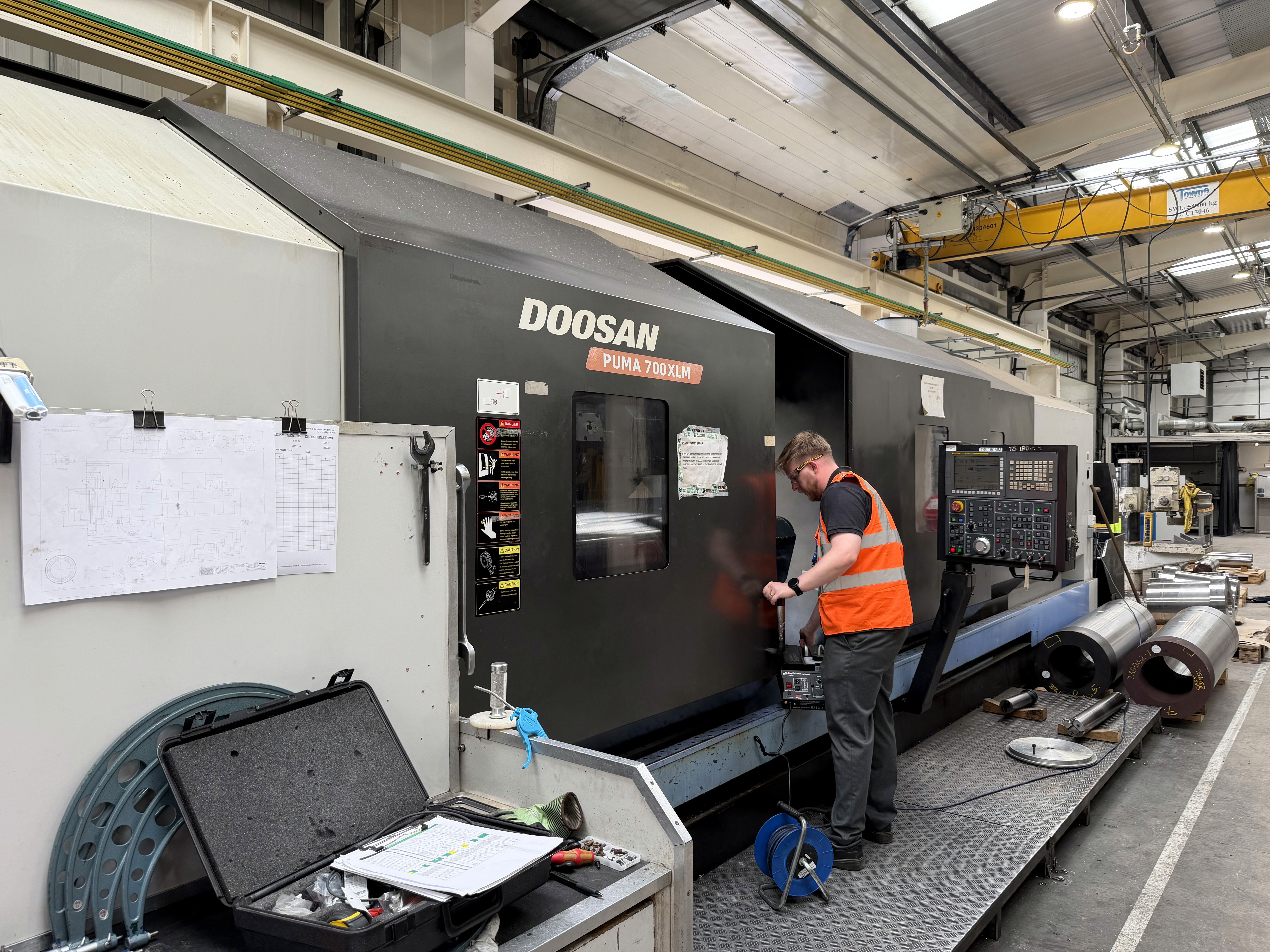
During an LEV TExT, examiners can assess clearance performance by introducing a visible challenge into the enclosure and measuring the time required for contaminants to be effectively removed. This provides objective evidence that operators are not being unnecessarily exposed when machine doors are opened following machining operations.
Rather than representing an arbitrary delay, clearance times form an important part of the overall engineering control strategy. Where excessive clearance periods are identified, this may indicate opportunities to improve extraction performance, optimise airflow distribution or review the design of the system itself.
Assessing MWF Exposure
Unlike many workplace contaminants, there is currently no widely accepted approach to routine personal exposure monitoring that adequately characterises the respiratory risk associated with water-mix metalworking fluid mist. This reflects the fact that the quantity of airborne mist alone does not determine the occupational health risk.
As discussed previously, the composition of metalworking fluid mist changes throughout the working life of the fluid. Microbiological contamination, fluid degradation and changes in coolant condition all influence the nature of the airborne aerosol, yet these factors cannot be determined simply by measuring the mass concentration of airborne mist.
Consequently, HSE guidance places greater emphasis on effective control of the process itself than routine measurement of airborne metalworking fluid mist. Demonstrating adequate control therefore relies upon a combination of suitable COSHH assessment, effective coolant management, appropriate engineering controls and LEV testing.
This can feel unfamiliar to many duty holders because effective control cannot be demonstrated using a single exposure measurement, as it often can for dust or solvents. Many hazardous substances can be monitored against Workplace Exposure Limits (WELs) to demonstrate whether exposure is adequately controlled. Water-mix metalworking fluids present a different occupational hygiene challenge. The focus is not simply on how much mist is generated, but whether the conditions that give rise to harmful exposure are being effectively controlled.
In situation where complete enclosure of a CNC cannot reasonably be achieved, effective exposure control often depends upon a combination of engineering measures rather than a single solution. During workplace assessments, we have encountered a wide variety of successful control strategies including partial enclosures, local shrouding, canopy hoods, airflow baffles, relocation or addition of outlets, improved coolant management and changes to operator working practices. The most appropriate solution is rarely determined by the extraction system alone, but by understanding how airborne contaminants behave throughout the process.
Conclusions
Effective control of respiratory hazards associated with CNC machining extends far beyond the installation of local exhaust ventilation or compliance with routine statutory examination requirements. Whilst LEV remains an essential engineering control, it represents only one component of a much broader occupational hygiene strategy.
Throughout this article, we've explored how the machining process, the condition of water-mix metalworking fluids, engineering controls and operator interaction all contribute to the overall exposure scenario. Unlike many workplace contaminants, the hazards associated with CNC machining are dynamic and may change over time without any alteration to the machining process itself. Consequently, maintaining effective control requires continual consideration of the entire system rather than any individual element in isolation.
For employers, this means looking beyond extraction performance alone. Effective coolant management, suitable COSHH assessments, planned maintenance, good operator practices and periodic verification of engineering controls all play an important role in protecting employee health.
Ultimately, occupational hygiene is not simply about measuring contaminants or demonstrating compliance with legislation. It is about understanding how workplace exposures arise, identifying the factors that influence them and ensuring that control measures remain effective throughout the life of the process. When these principles are applied together, organisations are better placed to protect employee health whilst maintaining efficient and reliable manufacturing operations.
Speak to an Occupational Hygienist
Every CNC machining process is different. Machine design, machining operations, metalworking fluids, engineering controls and operator practices all influence the occupational health risks present within the workplace.
If you're reviewing your current control measures, introducing new machining centres or require independent occupational hygiene advice, NOHH can provide practical, evidence-based support. Our team undertakes COSHH assessments, LEV Thorough Examination & Test (TExT), Exposure Monitoring and occupational hygiene consultancy across engineering and manufacturing environments throughout the UK.
To discuss your CNC machining processes or occupational hygiene requirements, speak with an experienced occupational hygienist.
CONTACT US